


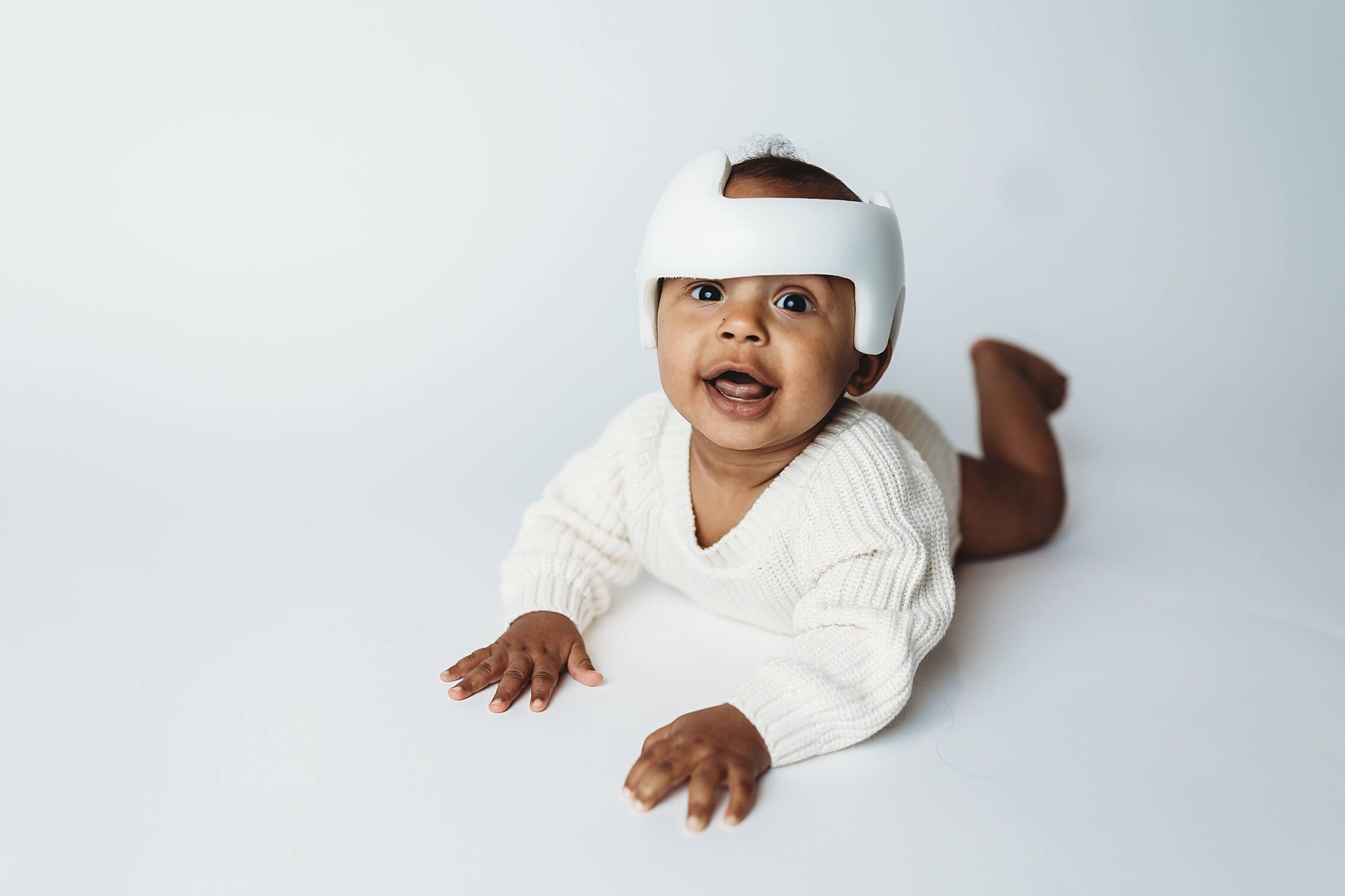
When one of my twins started helmet therapy, I remember feeling overwhelmed and unsure of what to expect. If you’re researching baby helmet therapy right now, you’re probably navigating a lot of emotions and questions too.
Before going through the process myself, I worried about everything — whether the helmet would bother my baby, how difficult the adjustment would be, and whether I was making the right decision.
Now looking back, I can honestly say the experience felt much less intimidating than I expected. I wanted to share our story in hopes that it helps other parents feel a little more reassured and supported through the process.
Why Head Shape Matters (and What Causes It)
It’s completely normal for babies to have some degree of head shape asymmetry. Their skulls are soft and still developing, which makes them especially sensitive to pressure.
Some of the most common causes include:
- Womb position – Babies don’t have much space in utero, and certain positions can put pressure on one side of the head.
- Twins or multiples – With my twins, space was very limited, which made head shaping more noticeable.
- Preferred sleeping position – Babies often favor turning their head to one side.
- Tight neck muscles (torticollis) – This can limit movement and contribute to flattening.
Supporting Natural Head Shape Development
In many cases, babies’ head shapes become more balanced over time as they grow and move more.
There are a few gentle ways to support that development:
- Tummy time (lots of it)
- Switching head positions during sleep
- Holding your baby more upright instead of always lying flat
- Encouraging movement toward the non-preferred side (toys, sounds, interaction)
With my twins, I was very intentional about doing these exercises. One responded really well and evened out over time. The other did not fully change—and that’s okay.
When a Helmet Becomes the Best Option
Sometimes, even with all the effort and intention, a baby’s head shape doesn’t shift as much as expected. That’s where helmet therapy comes in—and I know firsthand how intimidating that can feel.
I remember thinking:
- Will it be uncomfortable?
- Will it bother my baby?
- Will the other twin try to pull it off?
But none of those concerns became an issue.
My baby didn’t seem to notice the helmet after the first day or two. His brother didn’t pay attention to it either.

How the Helmet Process Works
We went through Cranial Technologies, and I can’t say enough good things about them.
Here’s what the process looked like:
- Consultation and scan – A quick, non-invasive 3D scan of your baby’s head
- Custom helmet fitting – The helmet is made specifically for your baby
- Wearing schedule – Typically around 23 hours a day
- Regular check-ins – Adjustments are made as your baby grows
The staff were incredibly kind, knowledgeable, and reassuring. The space was clean and well-organized, and every visit felt straightforward and efficient. We went to the Dunwoody location, but they have several locations around the Atlanta area, which makes scheduling easier.
What Daily Life Is Like with a Helmet
This was one of my biggest concerns, but it turned out to be much simpler than I expected.
- Cleaning is easy and becomes part of your routine
- Babies adapt quickly
- It doesn’t interfere with holding, feeding, or bonding
The treatment period was also shorter than I anticipated. We saw noticeable improvement without needing it for a long time.
My Honest Experience as a Twin Mom
Having twins added another layer of concern. I was managing two babies, both with head shape differences, trying to stay consistent with exercises and make the right decisions.
In the end:
- One baby’s head shape became more balanced with repositioning and exercises
- The other needed a helmet, and it was the right decision
What initially felt overwhelming became manageable very quickly. Looking back, I would make the same choice again.
Final Thoughts
If you’re considering helmet therapy, know that this is something many families go through.
Some babies’ head shapes shift naturally with time and movement, while others benefit from additional support. Both are completely normal.
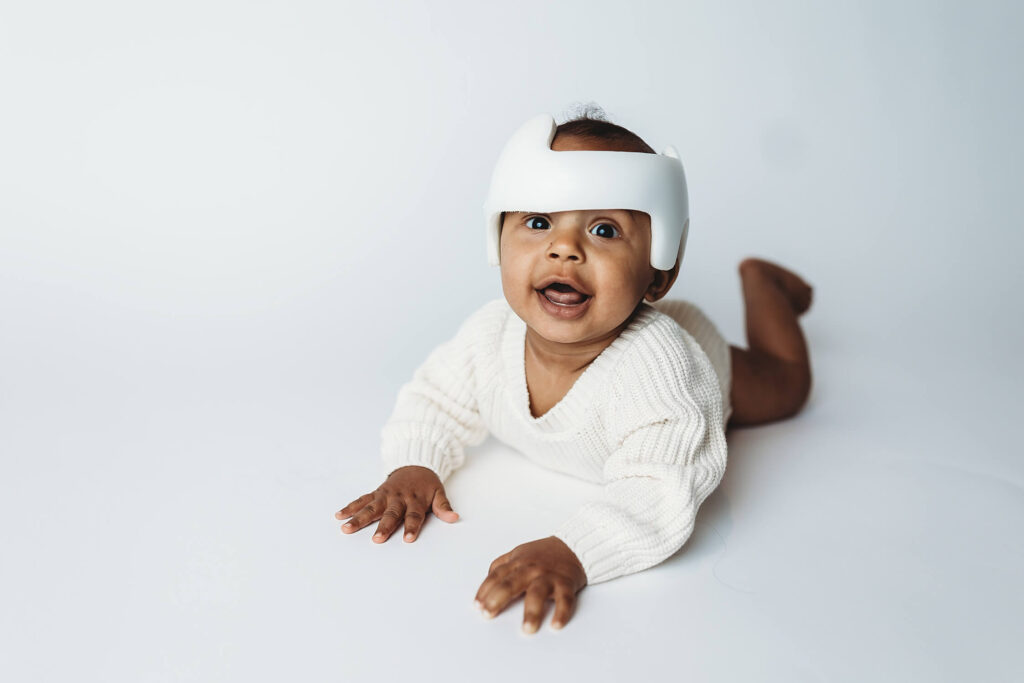
As both a photographer and a parent, I can say this clearly: your baby is still perfect and completely themselves, with or without a helmet.
And if you’re in the Atlanta area, Cranial Technologies provides an excellent experience.
Documenting Every Stage of Babyhood
One of the things parenthood teaches us is how quickly every stage changes — even the ones that initially feel overwhelming or uncertain.
Whether your baby is a newborn or already a few months old, these moments are still worth remembering. My approach to family and newborn photography is centered around creating relaxed, meaningful images that reflect your real life and connection in these early days with your baby.
Baby Helmet Therapy FAQs
What is baby helmet therapy?
Baby helmet therapy uses a custom cranial helmet to gently help improve head shape as a baby grows. It’s commonly recommended for plagiocephaly or head shape asymmetry.
How long do babies wear a helmet?
Many babies wear their helmet around 23 hours a day for several months, though treatment length varies depending on age and severity.
Does helmet therapy bother babies?
Most babies adjust surprisingly quickly. In our experience, the helmet became part of the normal routine after the first few days.
Is helmet therapy painful for babies?
Helmet therapy is not considered painful. The helmet is custom-made to fit your baby comfortably while guiding head growth over time.
Can head shape improve without a helmet?
Some babies improve naturally with repositioning, tummy time, and physical therapy. Others benefit from additional support through helmet therapy.
When is the best age to start helmet therapy?
Many families begin helmet therapy between 4–6 months, but recommendations vary depending on the baby’s growth and individual needs.


