


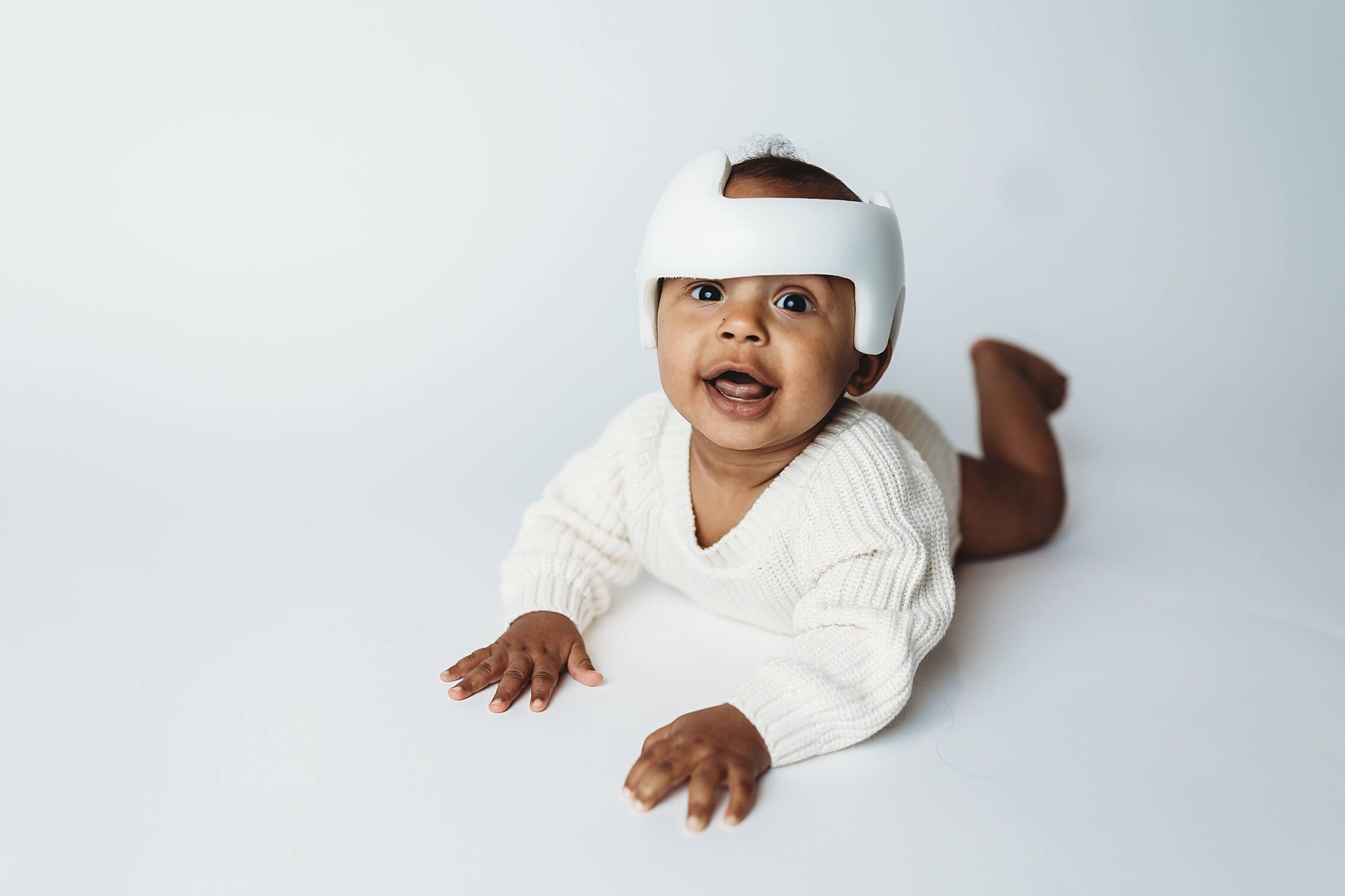
When one of my twins started helmet therapy, I remember feeling overwhelmed and unsure of what to expect.
If you’re researching helmet therapy in Atlanta right now, you may be asking many of the same questions I was. Does the helmet hurt? Will my baby hate wearing it? How long will they need it? What does the process actually look like?
Before going through it myself, I worried about all of those things.
Looking back, the experience was much less intimidating than I expected. My baby adjusted quickly, the appointments became part of our routine, and what at first felt like a big deal eventually became just another part of everyday life.
Because I couldn’t find many personal accounts from Atlanta parents when we were going through it, I wanted to share our experience with baby helmet therapy Atlanta in case it helps another family feel a little more prepared.
A note for parents: This post shares our family’s personal experience with helmet therapy and is for informational purposes only. Every baby’s head shape and treatment needs are different. Your pediatrician or qualified specialist can help determine what is appropriate for your baby.
Why Do Babies Develop Flat or Uneven Head Shapes?
A baby’s skull is soft and still developing, which makes it possible for pressure to affect head shape during infancy.
Some babies naturally develop some degree of asymmetry, while others may develop more noticeable flattening.
Some factors that can contribute include:
- Position in the womb – Babies have limited space before birth, and positioning can sometimes contribute to head shape differences.
- Twins or multiples – With my twins, space was obviously limited, and we noticed differences in their head shapes early on.
- Preferred sleeping position – Babies often develop a preference for turning their head to one side.
- Torticollis – Tight neck muscles can make it difficult for a baby to comfortably turn their head in both directions.
- Time spent lying on the back – Babies spend a significant amount of time on their backs, particularly during sleep.
Not every baby with an uneven or flattened head shape needs helmet therapy. In some cases, head shape improves naturally as babies grow, move more, spend time on their stomachs while awake, and develop better head and neck control.
What Is Plagiocephaly?
You may hear the terms plagiocephaly and brachycephaly when researching baby head shape.
Plagiocephaly generally refers to flattening or asymmetry toward one side of the back of the head. Brachycephaly generally refers to flattening across the back of the head.
If you’ve noticed that your baby’s head doesn’t look symmetrical, it’s completely understandable to start searching for answers. A pediatrician or specialist can evaluate your baby’s head shape and help determine whether monitoring, repositioning, physical therapy, or helmet therapy may be appropriate.
Supporting Natural Head Shape Development
Depending on your baby’s individual situation, there are several ways parents may be encouraged to support healthy development and movement.
These can include:
- Tummy time while awake and supervised
- Encouraging your baby to look in both directions
- Changing positions during awake time
- Holding your baby upright
- Encouraging movement toward the less-preferred side
- Following recommendations from your pediatrician or physical therapist
With my twins, I was very intentional about positioning and exercises. One baby’s head shape responded really well and became more balanced over time. The other did not change as much.
And that was when we started considering helmet therapy.

When Does a Baby Need Helmet Therapy?
This is one of the biggest questions parents have when they first notice a flat or uneven area on their baby’s head.
There isn’t one answer that applies to every baby.
A healthcare professional may consider factors such as your baby’s age, the degree and location of the asymmetry, how the head shape is changing over time, and whether other approaches have helped.
For us, despite everything we were doing, one of our twins continued to have a noticeable difference in head shape.
That was when helmet therapy became part of our conversation.
I remember wondering:
- Will it be uncomfortable?
- Will my baby try to pull it off?
- Will it interfere with sleep?
- Will it make holding and feeding more difficult?
- Will the other twin constantly try to take it off?
Thankfully, most of those fears turned out to be much bigger in my head than they were in reality.
My baby adjusted surprisingly quickly.
After the first day or two, the helmet simply became part of our routine.
Helmet Therapy in Atlanta
If you’re searching for helmet therapy in Atlanta, you’ll find providers who specialize in evaluating and treating infant head shape concerns.
For our twins, we chose Cranial Technologies. We went to the Dunwoody location, and our experience was very positive. The process felt organized and straightforward, and the staff were kind, knowledgeable, and reassuring.
Cranial Technologies also has multiple locations in the Atlanta area, which can make appointments more convenient depending on where you live.
Of course, choosing a provider is a personal decision, and your pediatrician may be able to help you determine what type of specialist or treatment is appropriate for your baby.
Our Experience With Cranial Technologies
Our first visit included a 3D scan of our baby’s head. The scan was quick and non-invasive and helped the team evaluate his head shape.
From there, the process involved:
- Initial consultation and 3D scan
- Evaluation of head shape
- Custom helmet fitting
- Adjustments as your baby grows
- Regular follow-up appointments
The helmet is custom-made for the individual baby rather than being a one-size-fits-all product.
The appointments themselves were also much easier than I had imagined. As a mom of twins, I appreciated that the visits were efficient and that we knew what to expect each time.
How Does Baby Helmet Therapy Work?
A cranial helmet is designed to gently guide the growth of a baby’s skull toward a more balanced shape as the baby grows.
The helmet doesn’t squeeze the baby’s head into a particular shape. Instead, the design provides space in areas where additional growth is desired while limiting pressure in other areas.
The amount of time a baby needs helmet therapy varies.
Many babies wear their helmets for much of the day, often around 23 hours a day, but the exact schedule and duration depend on the baby’s individual treatment plan.
Your provider will give you specific instructions for wearing, cleaning, and caring for the helmet.
How Long Do Babies Wear a Cranial Helmet?
One of the first things parents usually want to know is how long their baby will need to wear a helmet.
There isn’t a universal timeline.
Treatment length can depend on:
- Your baby’s age when treatment begins
- The severity of the head shape difference
- How quickly your baby’s head grows
- How your baby responds to treatment
- Your provider’s recommendations
We were pleasantly surprised by how quickly we saw changes.
The treatment period was also shorter than I had expected.
What Is Daily Life Like With a Baby Helmet?
This was probably my biggest concern before we started.
I wondered whether the helmet would make everything harder.
But honestly, it became part of our normal routine surprisingly quickly.
Cleaning
Cleaning the helmet became one more small part of our daily routine.
Feeding
It didn’t prevent us from holding or feeding our baby normally.
Sleep
Our baby continued with his normal sleep routine, following the instructions we were given.
Holding and cuddling
This was important to me.
I didn’t want the helmet to make me feel like I couldn’t enjoy those everyday baby moments.
It didn’t.
We continued holding, cuddling, playing, and doing all of the normal things we did before.
And eventually, I stopped thinking about the helmet altogether.
What About Taking Photos With a Baby Wearing a Helmet?
As a photographer, I obviously couldn’t help but think about this part, too.
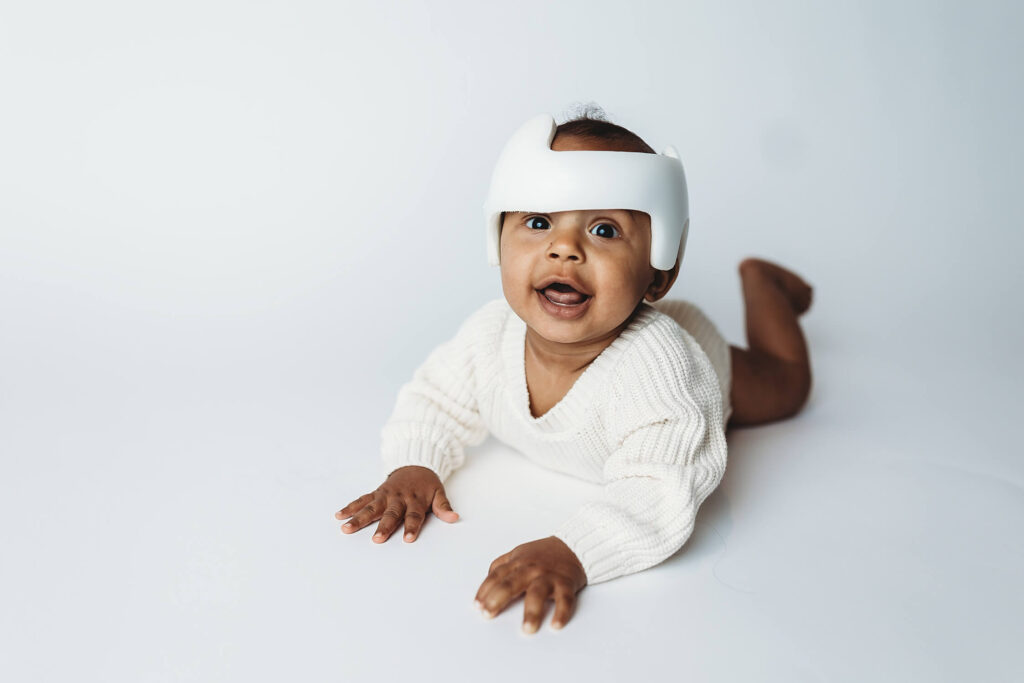
A helmet is part of your baby’s story during that particular season of life.
It doesn’t make your baby any less adorable.
It doesn’t erase the little expressions, the smiles, the rolls, the cuddles, or the personality you’re getting to know.
If anything, those images can become especially meaningful later because they remind you of a chapter you may have been worried about at the time.
Your baby doesn’t need to look “perfect” for their photographs.
They just need to be themselves.
How Much Does Helmet Therapy Cost in Atlanta?
If you’re researching helmet therapy in Atlanta, you may also be wondering about the cost.
Pricing can vary depending on the provider, your baby’s treatment plan, insurance coverage, and the length of treatment.
Because costs and insurance coverage can change, it’s best to contact the provider directly for current pricing and to find out what your insurance may cover.
Your pediatrician’s office may also be able to provide guidance about referrals and insurance requirements.
My Honest Experience as a Twin Mom
Having twins added another layer to the experience. I was managing two babies at once, watching their head shapes develop differently, trying to stay consistent with exercises, and wondering whether I was doing enough. Ultimately, their experiences were different. One baby’s head shape improved with repositioning and exercises, while the other needed a helmet, and that was okay.
I think that’s one of the hardest things about parenting: realizing that you can do everything “right” and still have two completely different outcomes. What at first felt overwhelming eventually became manageable. My baby adjusted, we adjusted, and eventually, the helmet was simply part of our everyday life. Looking back, I would make the same decision again.
Baby Helmet Therapy FAQs
Baby helmet therapy uses a custom cranial helmet to help guide the shape of a baby’s developing skull. It is commonly used for certain cases of plagiocephaly or brachycephaly.
A properly fitted helmet should not be painful. Babies can experience an adjustment period, and your provider should be contacted if you have concerns about fit, irritation, or discomfort.
Many babies adjust surprisingly quickly. In our experience, our baby seemed to adapt within the first few days and soon treated the helmet as part of his normal routine.
Many treatment plans involve wearing the helmet for approximately 23 hours per day, but your baby’s specific schedule will come from their provider.
Treatment length varies from baby to baby. Age, head shape, growth rate, and response to treatment can all affect the timeline.
Some babies’ head shapes improve naturally as they grow and become more mobile. Depending on the situation, a healthcare professional may recommend repositioning, physical therapy, monitoring, or other treatment.
There isn’t one age that is right for every baby. Treatment recommendations depend on individual head shape, growth, age, and other factors. Your pediatrician or specialist can help determine whether evaluation or treatment is appropriate.
There are providers serving families throughout the Atlanta area. We personally used Cranial Technologies at their Dunwoody location. Your pediatrician can also help with referrals and recommendations based on your baby’s needs.
Insurance coverage varies by plan and individual circumstances. Contact your insurance company and treatment provider to understand current coverage, requirements, and out-of-pocket costs.
Documenting Every Stage of Babyhood
Parenthood has a funny way of making us realize that the stages we worry about the most can eventually become some of the memories we treasure. The newborn days, the first smiles, and those months of discovering who this little person is becoming all pass so quickly. Even the seasons that didn’t look quite like we imagined become part of their story. As a photographer and a mom, I believe those moments are worth documenting exactly as they are. Your baby doesn’t need to wait until the helmet comes off, and your family doesn’t need to wait for everything to feel perfect.
Continue Reading
What to Wear for Newborn Photos
Wondering what everyone should wear for your newborn session? Here’s how to choose comfortable, timeless outfits without overthinking it.
Lifestyle vs. Posed Newborn Photography
Not sure whether you want candid lifestyle photographs, posed newborn portraits, or a combination of both? Here’s what you can expect from each approach.
Atlanta Newborn Photography
Your baby won’t be this little forever.
I document newborns in the comfort of their own homes, combining natural, candid moments with timeless portraits of your baby. The goal isn’t to create a perfectly staged version of your family, but to document this season honestly — including the cuddles, the chaos, and the people who make your baby feel at home.
Explore Atlanta newborn photography →
Atlanta Maternity Photography
Before there was a baby in your arms, there was the anticipation of meeting them.
Maternity sessions are about documenting this part of your story, whether it’s your first baby or another chapter in a growing family.
Explore Atlanta maternity photography →
Atlanta Family Photography
And then, somehow, your newborn isn’t a newborn anymore.
Family photography gives you a chance to document all those stages in between — the personalities, connection, movement, and everyday moments that make your family yours.
Explore Atlanta family photography →
One Last Thought
If you’re in the middle of researching helmet therapy in Atlanta, I know how easy it is to feel overwhelmed by information and questions.
I remember being there.
For us, the helmet became something much less scary than I had imagined. It was simply one small part of our baby’s story — and it didn’t change who he was or how much we loved looking at him.
Your baby is still your baby, helmet or no helmet.
And that little face, those smiles, those cuddles, and this particular chapter of your family’s life are worth remembering.


