As Atlanta parents, we’re surrounded by water. Between neighborhood pools, lake vacations, and beach trips, it’s hard to imagine a Georgia childhood that doesn’t involve swimming. If you’re researching Atlanta baby swim lessons or wondering when to start, here’s what I learned as a mom of three.
Yet many parents are surprised to learn that drowning is the leading cause of death for children ages 1-4 in the United States. The CDC reports that more children in this age group die from drowning than any other cause of death, and drowning can happen quickly and quietly.
That statistic alone is enough to make swim lessons a priority.
But when should you start? What do babies actually learn? And what’s the difference between traditional swim lessons and survival swim programs?
As a mom, I’ve been through this journey myself.
My Experience Starting Swim Lessons Early
With my firstborn, I was that eager first-time mom who signed up for everything.
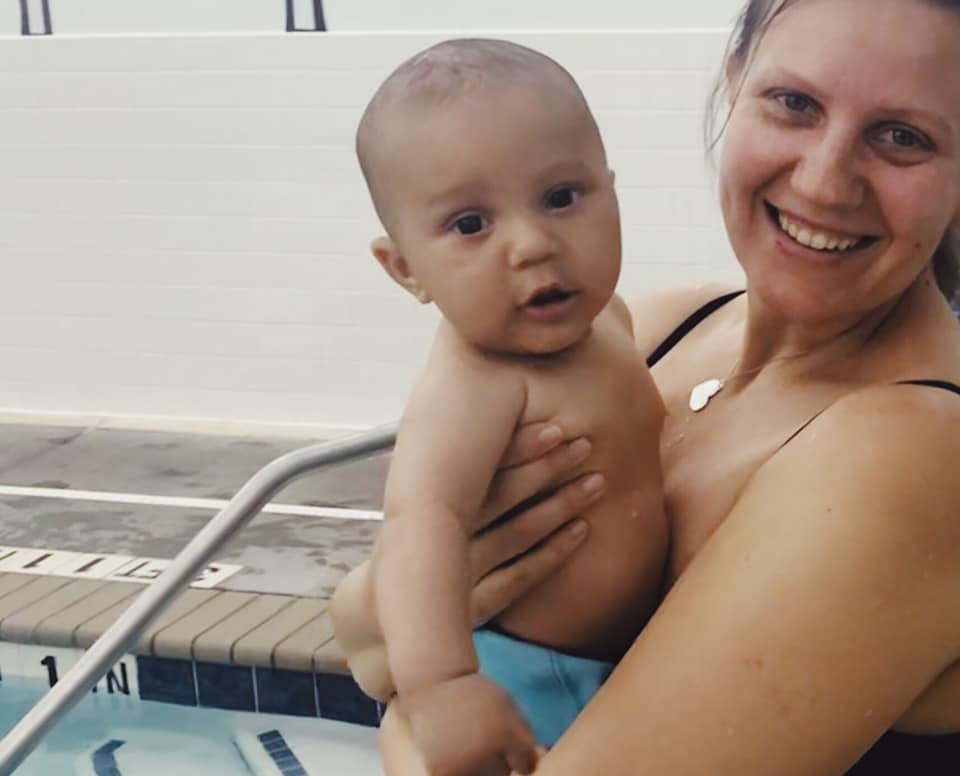
When my son was about three months old, I enrolled us in baby swim lessons in Atlanta. I imagined he would start learning how to swim right away.
Instead, I quickly learned that infant swim classes aren’t really about swimming.
The goal was water confidence.
We spent our time singing songs, splashing, blowing bubbles, practicing floating, and introducing basic water safety skills. Babies learn to feel comfortable in the water, hold onto the side of the pool, and, in some programs, begin rolling onto their backs.
At first, I was surprised.
Looking back, though, those early lessons laid the foundation for future swimming skills and helped him build confidence around water.
Then COVID hit. Classes stopped, and we never got back into a consistent routine.
A few years later, we had twins.
If you’ve ever tried coordinating activities with twins, you know exactly where this story is going.
Most baby swim lessons require an adult in the water with each child. Suddenly, one class needed two adults, two schedules, two towels, two sets of swim diapers, and a whole lot of logistics.
Needless to say, attending regularly became much harder.
Traditional Baby Swim Lessons in Atlanta vs. Survival Swim Lessons
One thing many parents don’t realize is that not all swim programs are the same.
Traditional Parent-and-Baby Swim Classes
Many families begin with Atlanta infant swim lessons, which focus on water confidence and parent participation. These classes are usually available starting around 3-6 months old.
The focus is on:
- Water comfort
- Bonding between parent and baby
- Songs and games
- Floating practice
- Kicking and movement
- Learning pool safety habits
Parents are in the water during the entire lesson.
These classes are wonderful for introducing babies to water in a positive, fun environment.
Survival Swim Programs
Survival swim programs take a different approach. Some parents choose Atlanta survival swim lessons because they want their child to learn self-rescue skills.
Depending on age and readiness, children may learn:
- How to roll from a face-down position onto their back
- How to float independently
- How to rest and breathe while floating
- How to move toward safety
These programs are often more intensive and structured than traditional swim classes.
Many parents choose survival swim instruction because they want an added layer of protection, especially if they have a pool at home or spend a lot of time around water.
It’s important to remember that no swim lesson can make a child “drown-proof.” Experts stress that swim skills are just one layer of protection and should always be combined with supervision and water safety measures.
When to Start Atlanta Baby Swim Lessons
The answer depends on your goals and the type of baby swim lessons in Atlanta you’re considering.
If your goal is water familiarity and confidence, parent-and-baby classes can begin in infancy.
If your goal is formal swimming instruction, the American Academy of Pediatrics recommends that many children can begin swim lessons starting around age one.
Every child develops differently, but the earlier children become comfortable around water, the better.
Research has shown that formal swim lessons may significantly reduce drowning risk in young children. One widely cited study found an 88% reduction in drowning risk among children ages 1–4 who participated in formal swim lessons.
A Personal Regret
As someone who grew up in Lithuania, swimming was simply part of life. We spent our summers in lakes and rivers, so being in the water always felt natural. Because of that, I assumed my own children would naturally become swimmers too.
But life has a way of getting in the way. Activities get postponed, schedules become complicated, and before you know it, years have passed. My oldest is now seven years old, and despite taking lessons here and there, he still hasn’t fully mastered swimming. That honestly surprises me because it was always something I considered important, yet it kept slipping down the priority list.
If I could give my younger self one piece of advice, it would be this: stick with it. Keep going. Make swim lessons a non-negotiable—not because every child needs to become a competitive swimmer, but because swimming is a life skill.
Why Atlanta Parents Should Prioritize Swim Safety
Living in Atlanta means water is part of everyday life. Neighborhood pools open every summer, families spend weekends at lakes, children attend pool parties, and many communities have splash pads and water features. With so many opportunities for water play, swim education becomes an important part of keeping children safe.
The CDC reports that approximately 4,000 fatal drownings occur each year in the United States, averaging about 11 drowning deaths every day. For children ages 1–4, drowning remains the leading cause of death.
These statistics are difficult to read, but they serve as a powerful reminder that learning to swim is more than just another childhood activity—it’s an important life skill.
What Drowning Really Looks Like
One reason this topic feels so personal to me is that I’ve witnessed two drowning incidents firsthand.
Drowning is not what most people imagine. It isn’t usually loud or dramatic. There are no frantic cries for help or huge splashes. More often, it’s a quiet struggle—a look of fear, silent panic, and a child desperately trying to stay above water. It can happen so quickly that people nearby don’t immediately realize what’s happening.
The first time I witnessed it was more than 20 years ago at a children’s birthday party. A young girl jumped into the pool, believing she was entering the shallow end, but it was much deeper than she expected. She immediately began to drown. I jumped into the pool fully clothed and pulled her to safety.
The second time happened much more recently while I was at apartment complex pool with my baby We were playing in the water when I noticed a little boy struggling to stay above the surface and trying to reach the edge of the pool. The adults nearby were talking together and hadn’t realized what was happening. Holding my baby with one arm, I jumped in and pulled the little boy out before the situation became even more serious.
Those experiences have stayed with me because they reinforced how quickly drowning can happen and how easy it is to miss if you’re not actively watching.
If there’s one message I hope every parent takes away, it’s this: stay alert whenever young children are around water. Whenever possible, be in the water with them or give them your full, undivided attention from the poolside. Conversations, phones, and other distractions can wait. A few seconds can make all the difference, and constant supervision remains one of the most important layers of water safety.
Final Thoughts on Baby Swim Lessons in Atlanta
If you have a baby, toddler, or young child, don’t wait for the “perfect time” to start swim lessons. If you’re considering Atlanta baby swim lessons, the most important thing is to begin building your child’s confidence around water early.
And if you’re a fellow twin parent wondering how you’re supposed to manage lessons with two babies, trust me—I understand. Bring another adult, call in a grandparent, recruit a friend, or do whatever you can to make it happen.
Because unlike many childhood activities, swimming isn’t just another extracurricular. It’s a life-saving skill.
About the Author
As an Atlanta newborn photographer and mom of three, I spend my days documenting the milestones that make childhood so special—from those sleepy newborn days to the adventures that come with growing up. Swim lessons may not seem like a milestone at first, but they’re one of those investments that can have a lifelong impact on your child’s confidence and safety.
Continue Reading
Looking for more family-friendly activities and resources around Atlanta? Here are a few more guides you may enjoy:
- Best Splash Pads in Atlanta – Discover our favorite splash pads to help your family cool off during the summer.
- Blueberry Picking Near Atlanta – A guide to the best local farms for a fun family outing.
- Things to Do in Atlanta with Kids – Family-friendly adventures for every season.
- Atlanta Baby Boutiques – Where to shop for baby essentials, gifts, and nursery inspiration.
- Atlanta Lactation Consultants – Trusted local support for new and expecting parents.