
Preparing for maternity leave in Georgia was something I never expected to think so much about before becoming a mother.
The Motherhood I Thought I’d Have
Every time I go home with my boys, it feels bittersweet.
Everywhere we go, I see mothers pushing strollers through the parks, meeting friends for coffee, taking leisurely walks with their babies. They’re chatting, laughing, and simply enjoying this short season of life.
Meanwhile, even while visiting family, I’m checking my work email every single day. I have a corporate job, and work doesn’t completely stop just because I’m on vacation.
But what stays with me isn’t that I’m working now. It’s that I never had that season with my own boys.
By the time I finally came out of the newborn fog and felt ready to take them for leisurely walks or meet up with other moms, my maternity leave was already over. Instead of spending those weeks settling into motherhood at our own pace, I was heading back to work.
I often wonder what those early months would have looked like if I’d had just a little more time. Not because I wanted a longer vacation, but because I wanted the chance to simply be a new mom.
When I became a mom in Atlanta, I quickly realized that preparing for maternity leave in Georgia and understanding Georgia maternity leave benefits looked very different from what I had imagined. Between understanding leave benefits, planning for childcare, and eventually returning to work, there was so much I wish I had known beforehand.
Looking back now as a mom of three, I can see that some of my biggest worries were practical ones—childcare, work schedules, pumping, and daycare waitlists. But some of the hardest parts were emotional. Letting go of the vision I had always imagined for those first months of motherhood wasn’t easy.
If you’re currently expecting a baby or planning your maternity leave, I hope sharing my experience helps you feel a little more prepared for the journey ahead.
Georgia Maternity Leave Laws: What Parents Need to Know
If you’re expecting a baby in Georgia, one of the biggest questions you may have is what maternity leave benefits are actually available. The answer depends on where you work and whether you qualify for federal or employer-provided benefits.
Understanding Georgia maternity leave laws starts with knowing that paid maternity leave in Georgia isn’t required for most private employers. Instead, many new parents rely on a combination of employer benefits, short-term disability insurance, accrued paid time off, and the federal Family and Medical Leave Act (FMLA).
If you’re eligible for FMLA, you may take up to 12 weeks of unpaid, job-protected leave following the birth, adoption, or foster placement of a child. To qualify, you generally must have worked for your employer for at least 12 months, logged at least 1,250 hours during the previous year, and work for a covered employer.
While there is no statewide paid maternity leave program for most private-sector employees, eligible Georgia state employees may qualify for paid parental leave and maternal birth leave under state policy. These benefits apply to qualifying state employees and are not available to all workers in Georgia.
Because every employer’s policies are different, it’s worth reviewing your employee handbook or speaking with your Human Resources department early in your pregnancy. Understanding your available leave, disability benefits, and paid time off can help you plan financially and focus on what matters most—spending those precious first weeks with your new baby.
The Reality of Maternity Leave in Georgia
I wanted to be a mom for as long as I can remember.
So when I finally had my first baby, a difficult realization hit me: I wasn’t going to be able to stay home with him for as long as I had always imagined. Eventually, I would need to return to work, and someone else would help care for my baby during the day.
I know many families face this reality every day, but that didn’t make it any easier.
I am incredibly grateful for the flexibility my employer provides. Like many people, I transitioned to working from home during COVID and have continued working remotely ever since. Alongside my full-time job, I also run my photography business.
But even with the flexibility of working from home, work is still work. Meetings still happen. Deadlines still exist. Working from home doesn’t replace childcare.
Thankfully, my mom was able to travel from Europe and help care for my son. Between my maternity leave and her support, we were able to keep him at home until he was six months old.
Looking back, even six months felt far too short. I don’t think there’s ever a point when you’re truly ready to leave your baby. That experience taught me just how quickly maternity leave passes—and how precious those first months together really are.
Maternity Leave Looks Different with Twins
When I became pregnant with twins, I realized maternity leave comes with challenges many parents never have to think about.
Twin pregnancies are often more physically demanding, and many twins arrive early. If your job requires long hours on your feet, heavy lifting, or a long commute, you may need to stop working before your babies are even born. That time away from work can reduce the amount of leave you have available once your babies finally come home.
For many twin families, there’s another reality to consider: the NICU. If your babies need time in the neonatal intensive care unit, your maternity leave often begins when they’re born—not when they’re discharged. That means you may spend part of your leave traveling back and forth to the hospital instead of settling into life together at home.
I was fortunate to have a desk job and work remotely, which allowed me to keep working until the very end of my pregnancy. I know that isn’t possible for everyone. Many parents expecting multiples have to stop working weeks before delivery simply because carrying twins is incredibly demanding on the body.
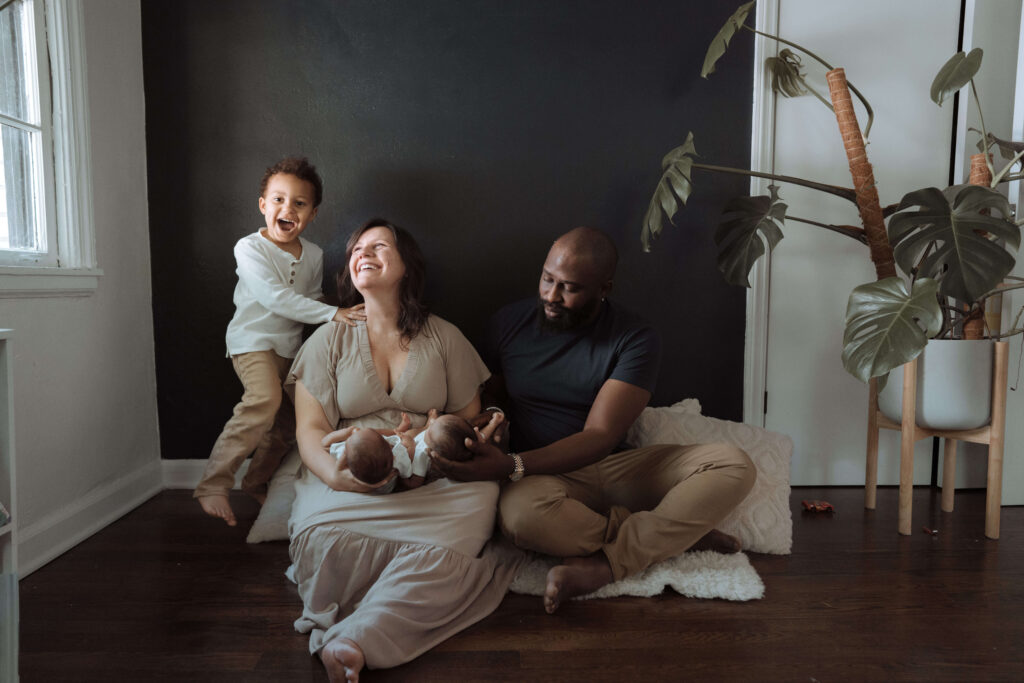
Photo By: Linnea Geiger
What Happens When Maternity Leave Ends?
One thing I wasn’t prepared for wasn’t maternity leave itself—it was what came after.
When we welcomed our twins, everyone warned us about the cost of daycare for multiple children. What surprised me even more were the waitlists.
I assumed we’d start researching childcare a few months before returning to work and find a center that fit our family’s needs.
Instead, I found myself calling center after center only to hear the same thing: infant spots were unavailable, waitlists stretched for months, or tuition exceeded what we could realistically afford.
It was stressful, overwhelming, and honestly a little shocking.
Once again, my mom came to our rescue. She traveled from Europe—not once, but twice—to help care for the boys. Between her support, additional leave, and careful planning, we were able to keep them at home until they were ten months old.
I know not every family has that kind of support, and I’ll always be grateful that we did. If you’re expecting a baby, one piece of advice I’d give is to start researching childcare much earlier than you think you’ll need to. In many parts of Georgia, infant daycare waitlists can fill months before your maternity leave ends.
What I Wish I Had Known Earlier
If you’re expecting a baby in Georgia, there are a few things I would encourage you to think about long before your due date.
While researching childcare, leave benefits, and preparing for baby’s arrival, I was also thinking about how I wanted to remember those first few weeks. If you’re still planning for your newborn stage, here’s my guide on when to book a newborn photographer.
Research Childcare Early
Earlier than you think you need to.
Many daycares have waitlists for infant care, and availability can vary significantly depending on your area and budget.
Even if you’re planning to stay home for several months, it helps to understand your options early.
Understand Your Leave Benefits
Every employer is different.
Take time during pregnancy to understand:
- FMLA eligibility
- Paid parental leave policies
- Short-term disability benefits
- PTO options
- Flexible work arrangements
Knowing what is available can help reduce uncertainty later.
Prepare for the Emotional Side
I spent so much time preparing for the logistics of returning to work that I didn’t fully prepare for the emotions.
Leaving your baby for the first time can feel incredibly difficult, even when you trust the people caring for them.
Give yourself grace during this transition.
It’s a big change for everyone.
Have a Breastfeeding and Pumping Plan
One resource that helped me tremendously was the book Work. Pump. Repeat.
Before returning to work, I worried about everything from pumping schedules to milk storage to what would happen during work travel.
The book helped me create a realistic plan and answered questions I didn’t even know I had.
If you’re planning to continue breastfeeding after returning to work, I highly recommend reading it before your leave ends.
Looking Back
When I was on maternity leave, I spent a lot of time wishing for more time—more months to settle into motherhood, unhurried mornings together, and just one more nap with a baby sleeping on my chest.
Years later, I still wish those seasons had lasted longer. But I also realize how many beautiful memories were tucked into those ordinary days: the late-night feedings, the contact naps, the tiny newborn stretches, and the way my babies fit perfectly in my arms.
At the time, those moments felt like everyday life. Now they feel priceless.
If you’re preparing for maternity leave, my biggest piece of advice is simple: plan ahead where you can, understand your leave options, accept help when it’s offered, and soak in as much of the experience as possible.
The practical challenges—whether it’s navigating Georgia maternity leave, planning for childcare, or adjusting to life with a newborn—will eventually work themselves out. The time with your baby, however, passes much faster than any of us expect.
Disclaimer: This article is intended for educational purposes and reflects Georgia maternity leave laws at the time of publication. Because employment laws and employer policies can change, always confirm your leave benefits and eligibility with your employer or Human Resources department.
Navigating Pregnancy in Atlanta?
Whether you’re preparing for maternity leave in Georgia, planning for your baby’s arrival, or soaking in those first newborn days, these moments pass quickly. As an Atlanta newborn photographer, I specialize in lifestyle in-home sessions that document your family’s story with timeless newborn and family portraits.
Learn more about my Atlanta newborn photography experience → here.
Continue Reading
- Best Splash Pads in Atlanta
- Fresh 48 vs. Newborn Photography: Which Session Is Right for You?
- Atlanta Lactation Consultants
- Mommy and Me Classes
- Atlanta Baby Boutiques